Our story

Kekova island has always kept us safe

I was born and raised in Demre. I studied electronics engineering at Istanbul Technical University (İTÜ) and worked as an engineer for a while; 13 years later, I came back home to Demre.

Thanks to my father's love of the sea and fishing, I spent my childhood in the coves of Kekova island. Some winters, storms left us stranded for a week in coves with no phone signal — but Kekova island always kept us safe.

I founded Kekovada to connect you with the captains who know these coves of my childhood best.

— Onur · founder of Kekovada

Onur's Kekova guide

Kekova, cove by cove from Çayağzı

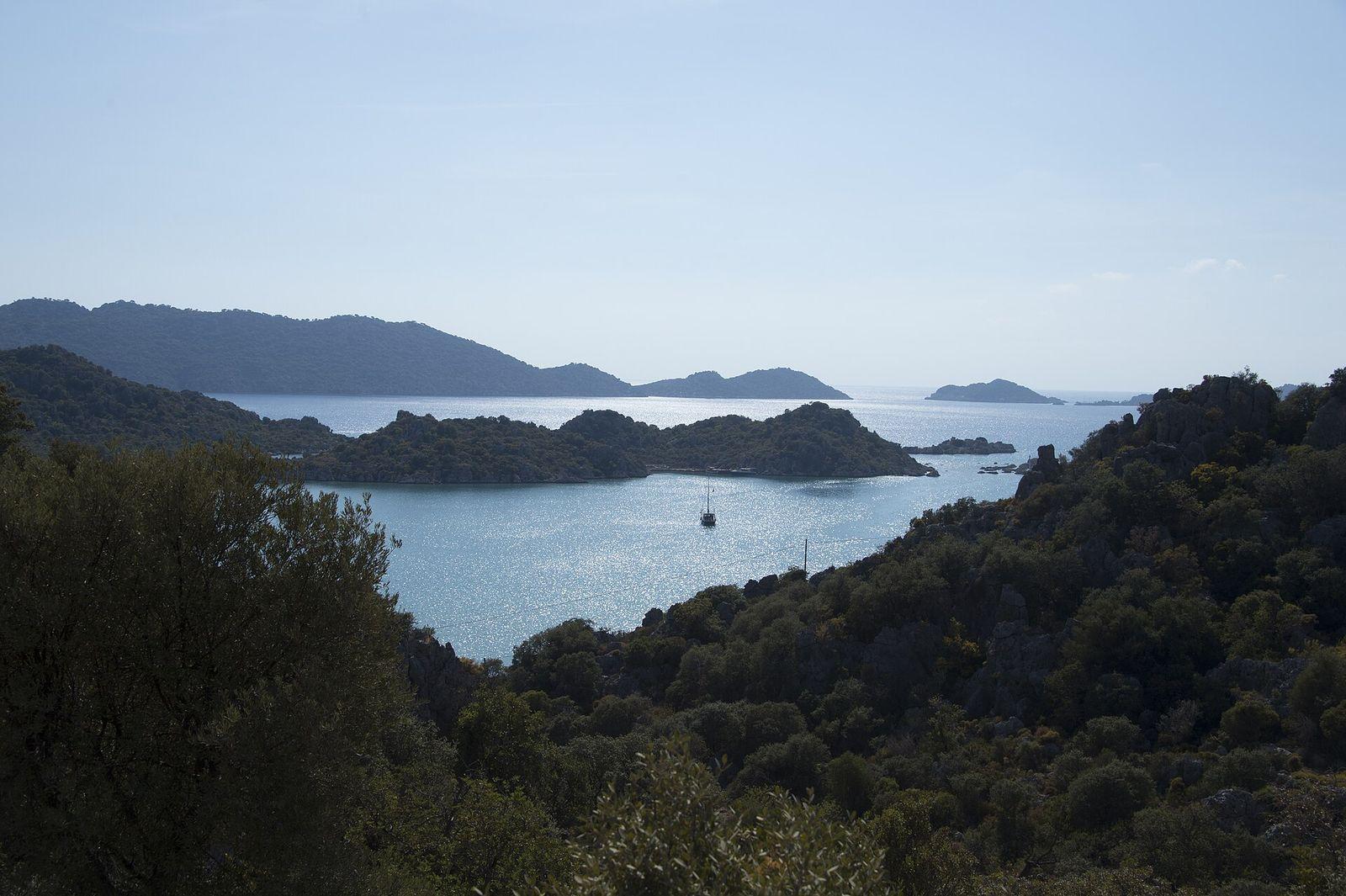
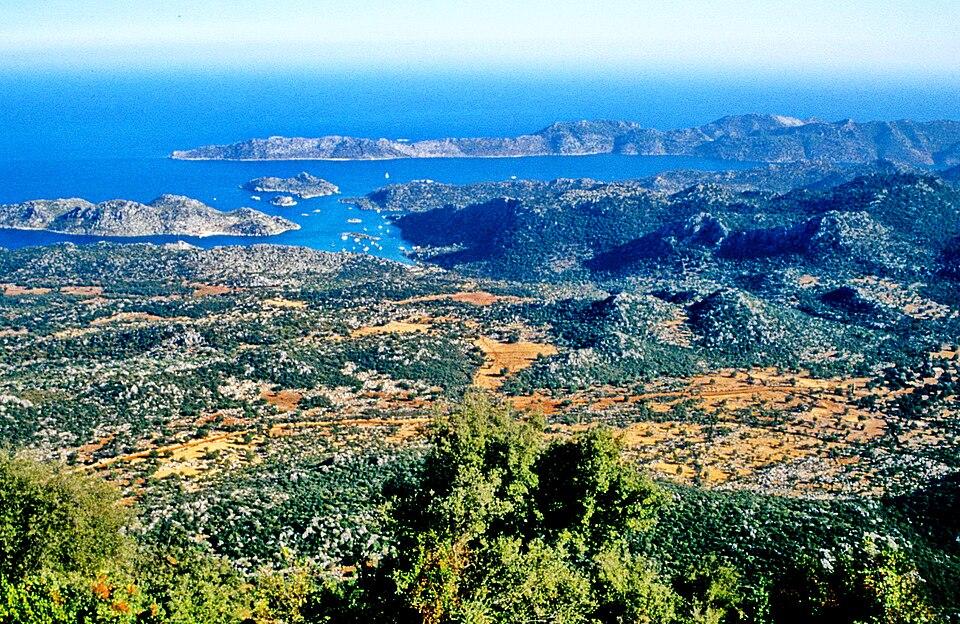
The island of Kekova and its coves can only be reached by boat: unspoilt nature, unforgettable views and famously clear water, protected as a Specially Protected Area since 1990. Below I describe the coves where I spent my childhood, in the order a boat leaving Demre's Çayağzı harbour visits them.

The day-tour route

The typical order of a day tour leaving from Çayağzı. Your captain may change it depending on the wind and how busy the coves are.

  1. 1

    Buzağılık Bay · Tırmısın

    After leaving Çayağzı harbour, the first stop is usually Buzağılık Bay. Tırmısın is a Lycian name that everyone still uses, although the village was recently renamed Çevreli.

    Before there was a road to Tırmısın, people walked up to the village from this bay. The Tırmısın Mosque is easy to spot from the sea, and the footpath is still in good shape.

    Onur's note: There's a cold freshwater spring in the bay — a wonderful first stop to cool off and start the day.
  2. 2
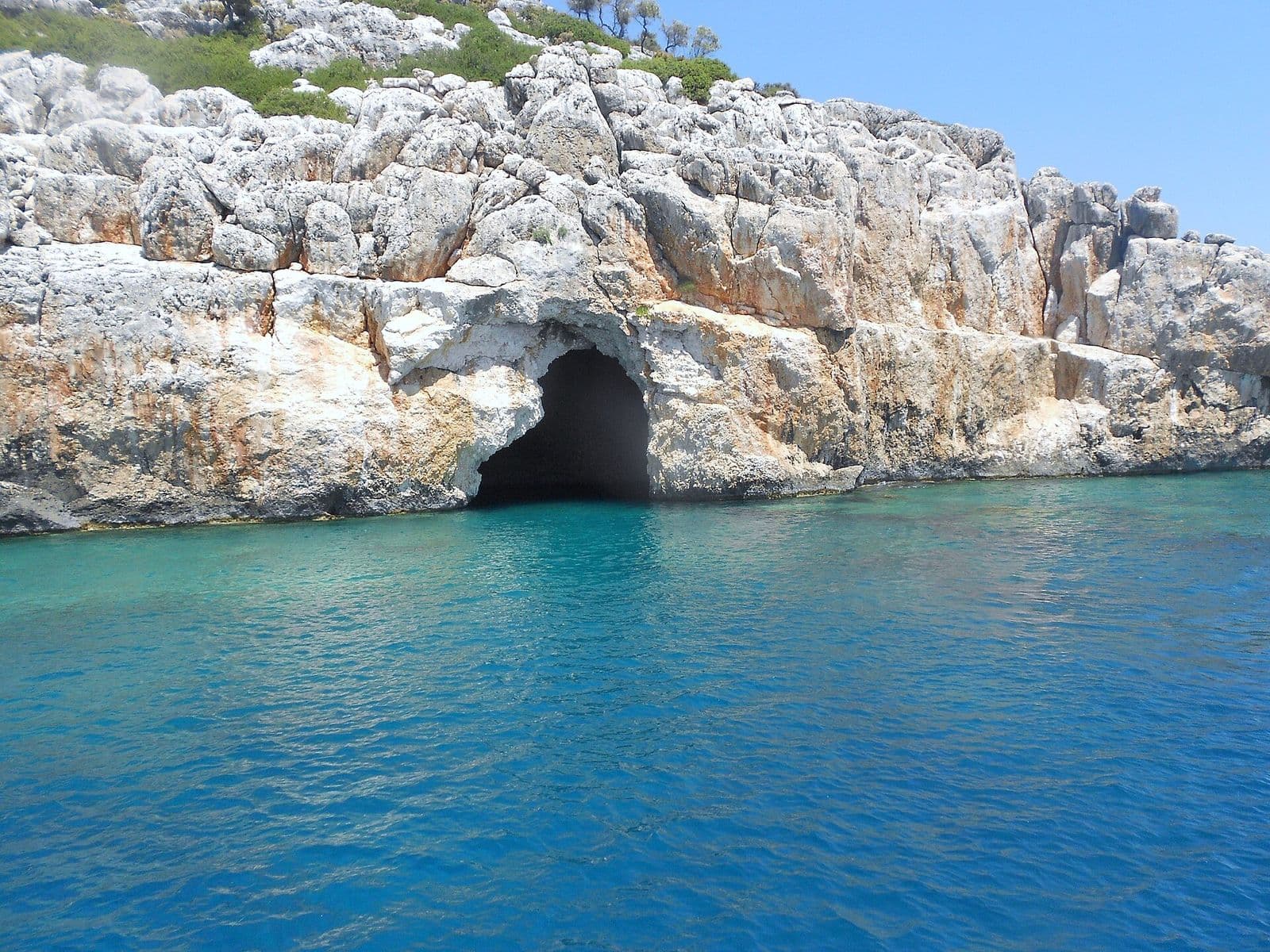
    Pirate Cave

    Pirate Cave

    It lies right on the way to Gökkaya. Inside it is larger than you'd think, and the sound of thousands of bats rings in your ears.

    After a few boating accidents, entry into the cave was closed; today boats approach the mouth and you view it from on board.

  3. 3
    Gökkaya Bay

    Gökkaya Bay

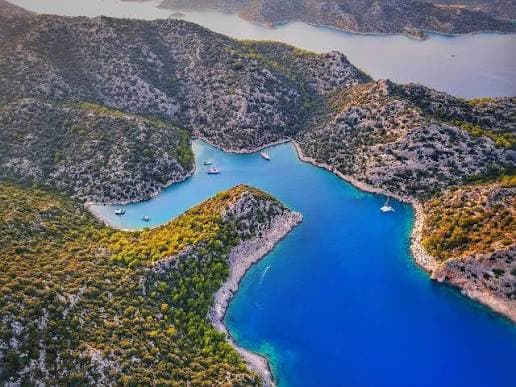
    A vast mother-nature bay that embraces almost everyone who comes to Kekova. It is ringed by small islands and islets, home to wild mountain goats.

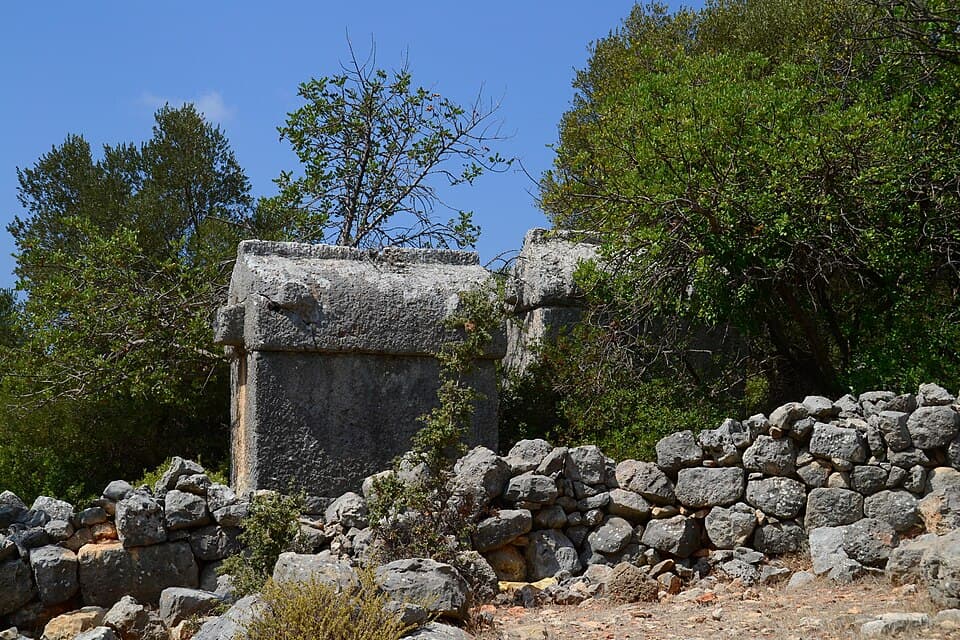
    Even if you can't see them, there are ancient tombs and altars on the islands' summits. Fragments of hundreds of thousands of seashells, crushed in antiquity to make purple dye, still lie where they were left. Cold springs rise in parts of the bay as well.

    Onur's note: If you spend the night here and anchor near a spring, bring a blanket — even in mid-August. You can get cold at night and fall ill. I mean it.

  4. 4

    Hamidiye Bay

    After Gökkaya, many coves line the channel between Kekova island and the mainland; the most famous is Hamidiye Bay.

    It is named after the legendary Ottoman cruiser Hamidiye. As the story goes, during the Balkan War of 1912–13 the Hamidiye, commanded by Rauf (Orbay) Bey, hid in this sheltered cove between her raids across the Eastern Mediterranean. The large Turkish flag her sailors painted on the rock is still visible from the sea. Calm, sheltered and clear — perfect for a swim.

  5. 5
    Kaleköy · Simena

    Kaleköy · Simena

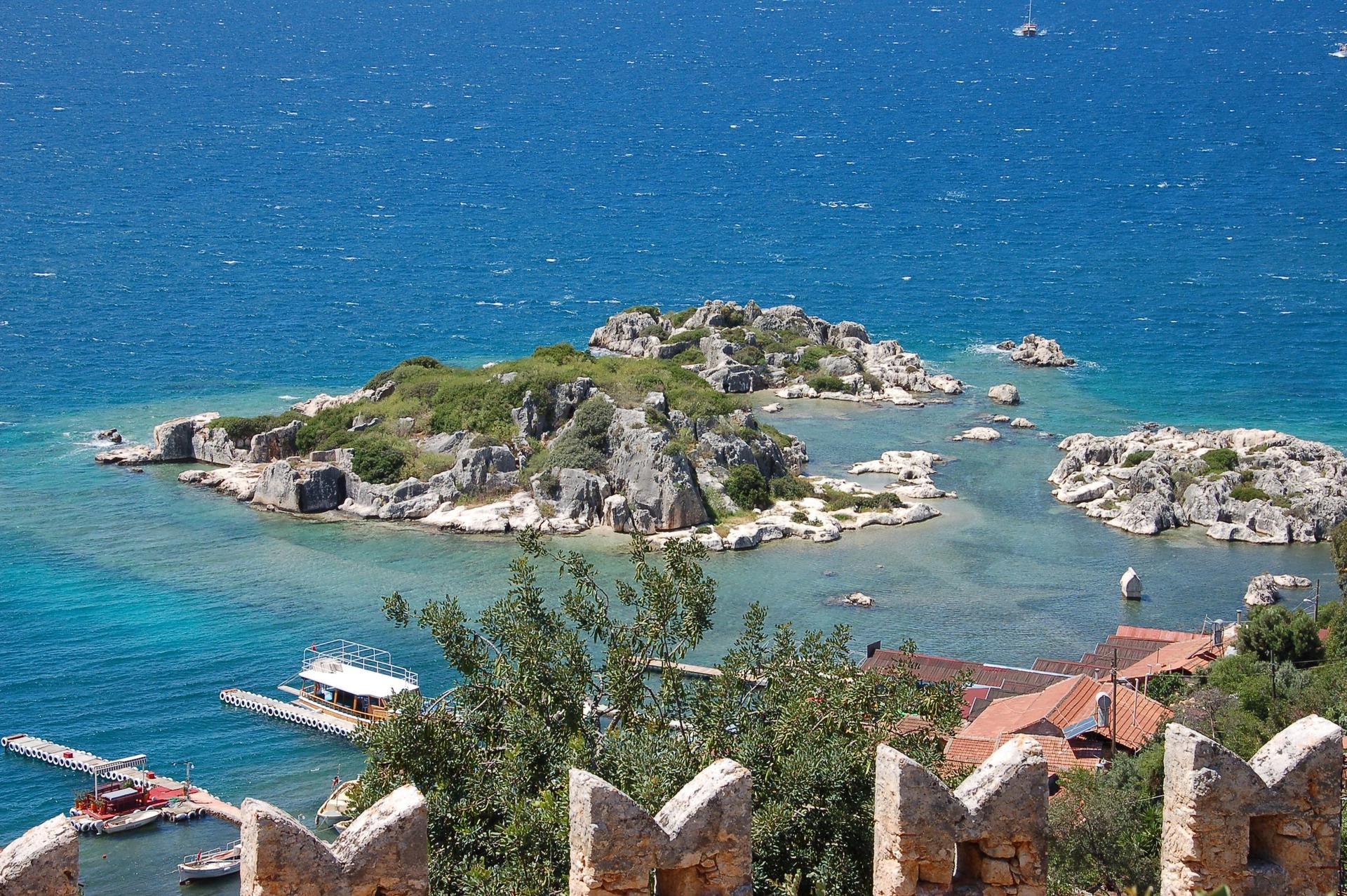
    The signature stop of the route. Ancient Simena dates back to the 4th century BC and was a member of the Lycian League. The medieval castle on the hill was built up against pirates; inside its walls hides a theatre carved into the rock, one of the smallest in Lycia. Higher up stands Rahmi Koç's villa — in the old days he would sometimes arrive by helicopter.

    You can also walk here on a footpath from Üçağız, but in my experience Kekova is a sea experience. Kaleköy and its views are part of the tour, but it is only a symbol.

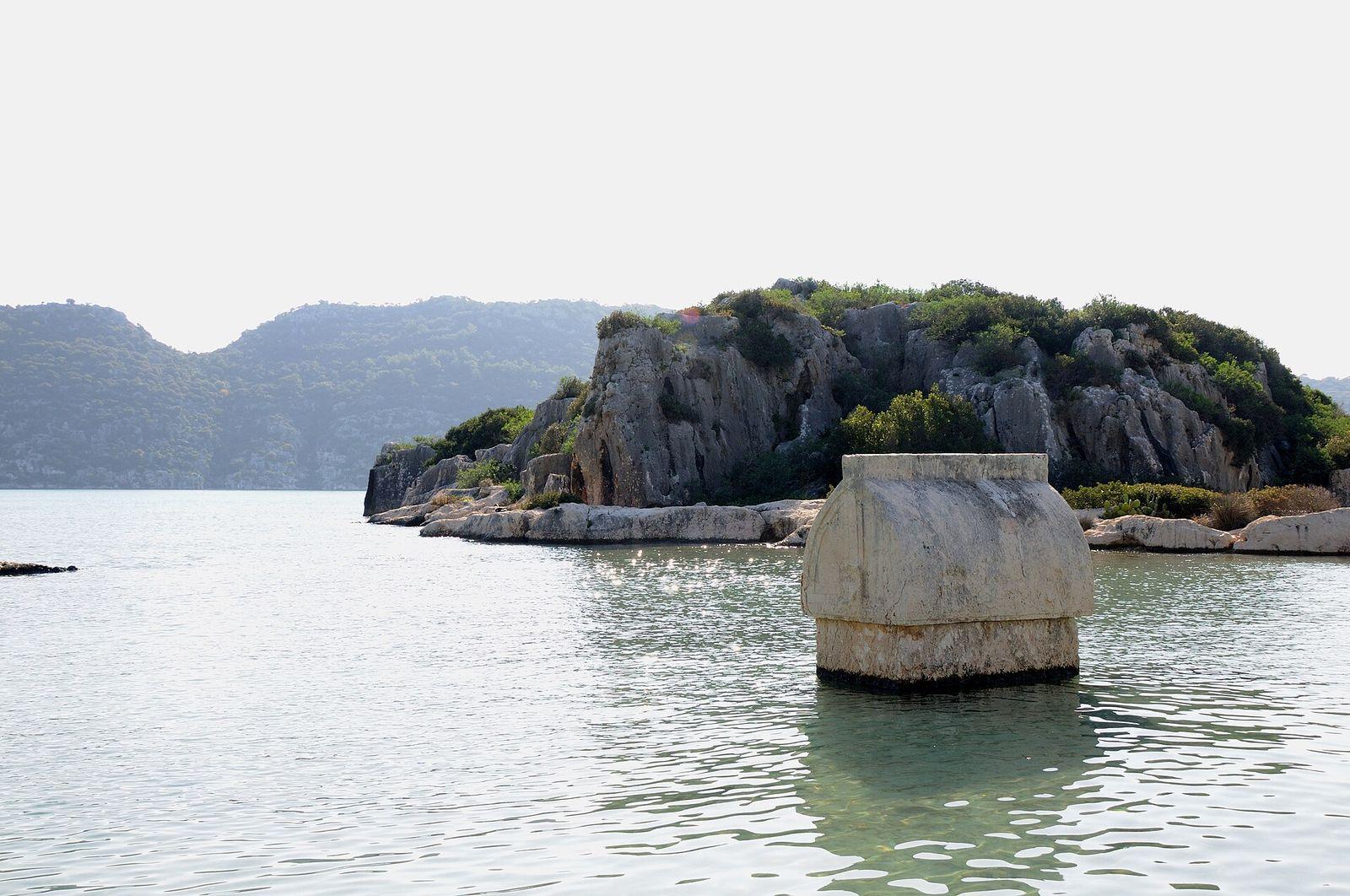
    When you reach Kaleköy, don't leave without seeing the two Lycian sarcophagi waiting in the sea — the faces of so many Türkiye travel posters. A story thousands of years old: the land is sinking, the tomb's roots are under the sea, yet the tomb still stands in daylight.

  6. 6
    The Sunken City

    The Sunken City

    After Kaleköy, the boats head for the opposite shore; the course is set. Castle on one side, city on the other. In fact you sail over parts of the city on the way, but those lie buried deep beneath the sea.

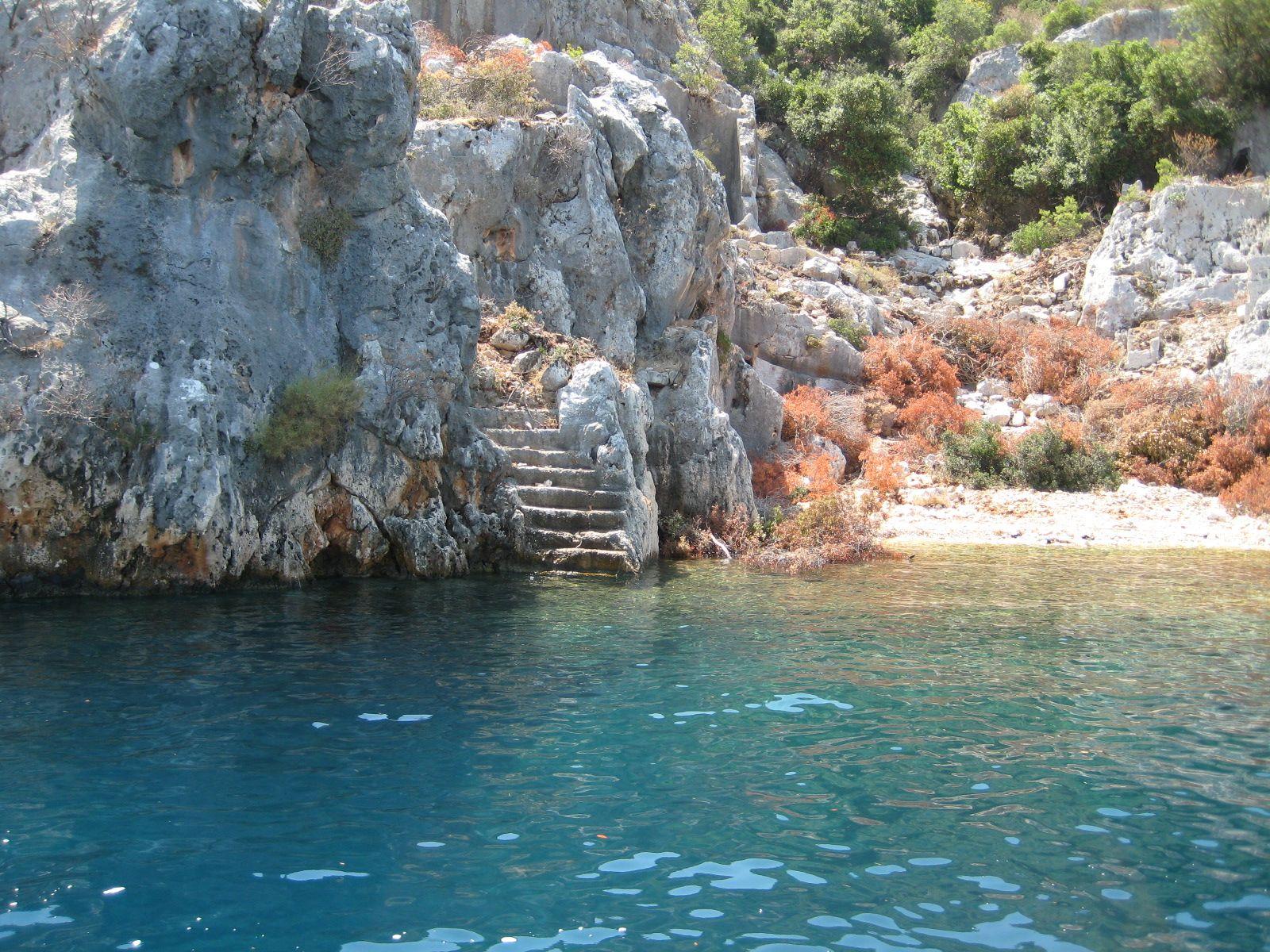
    On the far shore stretches the Lycian settlement that sank in the earthquakes of the 2nd century AD: staircases rising from under the sea towards the hills of Kekova island, house walls half on land and half in the water.

    Onur's note: It is a protected area, so swimming and diving are forbidden here. There may still be hidden treasures below.

  7. 7

    Tersane Bay

    The Sunken City ends at Tersane Bay. A magnificent sea, mild even in winter — and the experience of swimming among ancient ruins.

    It has a small beach. When I was a child an arch still stood there, but sadly it collapsed in a winter storm; its pillars are still standing. For keen walkers there are more ruins 5–10 minutes further back.

  8. 8
    Aquarium Bay

    Aquarium Bay

    Usually our last stop on day tours. It's called the Aquarium because, although it is very deep, you can see the bottom with crystal clarity. The best spot for mask and snorkel — and then the journey home begins.

My tips for private boats and overnight trips

What if you charter a private boat or want to spend the night in the coves? Of course I have suggestions.

  1. 9
    Üçağız Village

    Üçağız Village

    If you boarded at Demre's Çayağzı harbour, see this village too: an authentic, charming Mediterranean fishing village with good restaurants. At its edge you can walk among the Lycian rock tombs of ancient Teimiussa.

    As a family we always went to Kekova İbrahim Restaurant. (Not an ad — a memory.)

  2. 10

    Değirmendere Bay

    Head a little deeper into Kekova and you reach one of the two places I'm in love with. Gliding by boat between two cliffs is an incredible feeling: both sides rise at least 40–50 metres, and the same cliffs drop straight down to the seabed.

    For those staying the night it has a wonderfully cool breeze, and again there are cold springs.

    Onur's note: The bottom is very deep, so anchoring can be tricky; captains usually also tie a line to the shore.

  3. 11
    Aperlai · Yörük Ramazan

    Aperlai · Yörük Ramazan

    Further in you reach the restaurants of Yörük Ramazan and Aperlai. There is no infrastructure here: fresh water arrives by boat, electricity comes from the sun, the stove burns wood. Chatting with Yörük Ramazan is a pleasure; portions are big, and prices are a notch above an average restaurant.

    It is also a lovely hiking spot. Look at a map and you'll see this narrow strip of land separating the Sıçak channel from the Gulf of Kekova — and of course an ancient city was founded at this strategic spot: Aperlai. A member of the Lycian League, it was known for the purple dye made from sea snails; part of its walls now lies under water.

    This peninsula is also the main reason trips from Kaş harbour take longer: boats from Kaş have to sail all the way around it to reach Kekova.

  4. 12
    Karalos Bay

    Karalos Bay

    I saved the best for last. On the open-sea side of Kekova, a cove that tucks you away like a snail's shell; storms can rage outside and you won't even notice.

    When my father bought his first boat, he asked what we should name it. I was in my last years of middle school and loved this cove so much that I said, "Let's call it Karalos." And so our boat was named Karalos.

These are just the highlights. If you have more questions or are curious about anything, you can always get in touch with us.

— Onur · founder of Kekovada